
Quick answer
Privacy film for your front door is a temporary fix. It goes on quickly and makes sense if you rent or plan to move. On a front door it often lifts at the edges, bubbles or scratches within a few years. Sandblasted glass is the permanent solution: the frosted look is part of the glass, so there is nothing to peel. Done once, done right.
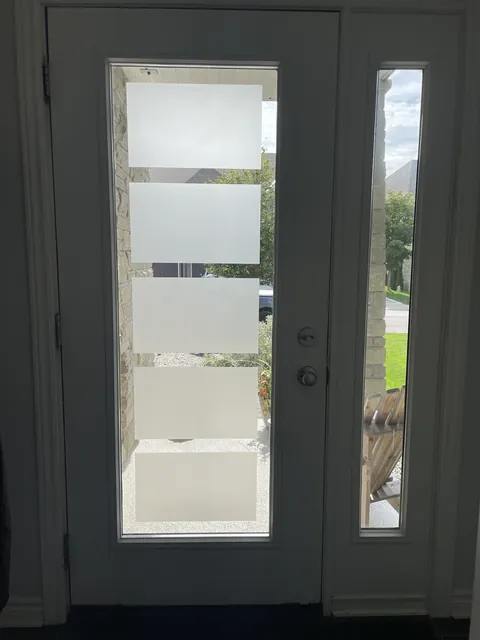
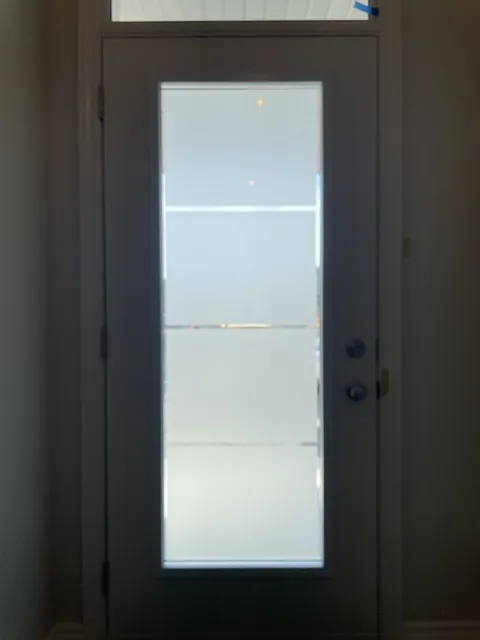
Why privacy film peels on a front door
Door glass film works well on a window that never moves. A front door is a harder job. It swings open and shut many times a day, it sits in direct sun, and the glass goes from hot to freezing cold through the year.
All of that works on the edges of the film. Once an edge lifts, dirt and moisture get underneath, and you start to see bubbles, white lines and corners that catch on a cloth. Most front door film starts to look tired within a few years.
Taking it off is its own job. Old film often comes away in pieces and leaves glue on the glass, which is why so many people end up living with it.
Front door window film vs sandblasted glass
Both give you the frosted look on day one. Here is how they compare after that.
| Privacy film or sticker | Sandblasted glass | |
|---|---|---|
| Type of fix | Temporary | Permanent |
| Fitting | Do it yourself in an afternoon | We install it in your existing door |
| After a few years | Edges lift, bubbles and scratches show | Looks the same as day one |
| Cleaning | Careful, dirt collects at the edges | Wipe it like any glass |
| Daylight | Yes | Yes |
| Lasts | A few years | As long as your door |
| Best for | Renters and short-term fixes | Owners who want it done once, done right |
If you rent or plan to move soon, a temporary fix like film makes sense. If you own your home and you’re tired of redoing it, a permanent solution done right is the one that stays.
Front door glass frosting: what sandblasting is
Sandblasting is the original way to frost glass. Fine sand is blasted at the surface under pressure, which roughens it into a soft white frost. The frost is part of the glass, not something stuck on top, so it can’t peel or bubble.
In a door glass insert, the sandblasted side faces inside the sealed glass unit. Both outside surfaces stay smooth, so you clean it like any other glass. Daylight still comes through, while shapes and faces on the other side are blurred.
The look most people know from film started this way. The popular 5 panel design, with clear lines between frosted panels, is one of the patterns we install as real sandblasted glass, along with the 4 Panel and 3 Panel and the rest of our frosted and sandblasted door glass.
Other front door privacy ideas
Film and sandblasted glass aren’t the only ways to make front door glass private. Here are the four we see most.
| Option | Privacy | Daylight | Upkeep |
|---|---|---|---|
| Privacy film | High | Yes | Peels and gets redone |
| Curtain or hanging blind | Only when closed | Only when open | Swings, gets dusty |
| Blinds between the glass | Open or closed, you choose | When you want it | Sealed, never dusted |
| Sandblasted glass | High, all day | Yes | None |
If you want to switch between full privacy and full daylight through the day, blinds between the glass are worth a look. If you want privacy that’s simply always there, sandblasted glass is the low-effort answer.
What we see on Ottawa front doors
Many Ottawa homes came with plain clear door glass that shows the whole front hall to the street. Film is often the first fix people try, and it’s usually what we take out when we come to fit sandblasted glass. The old glass and its film come out together, and we take them away.
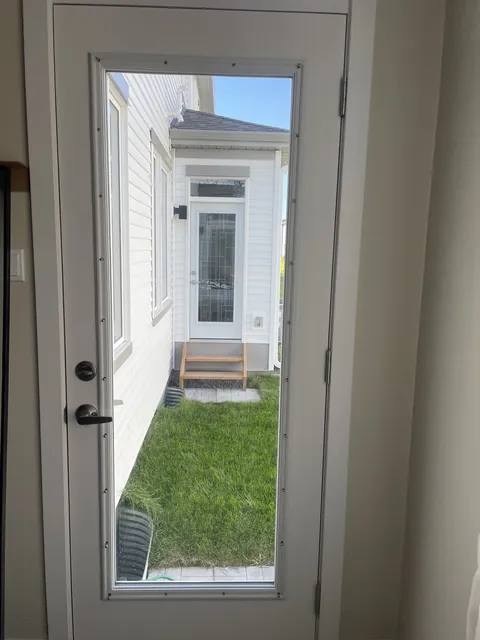
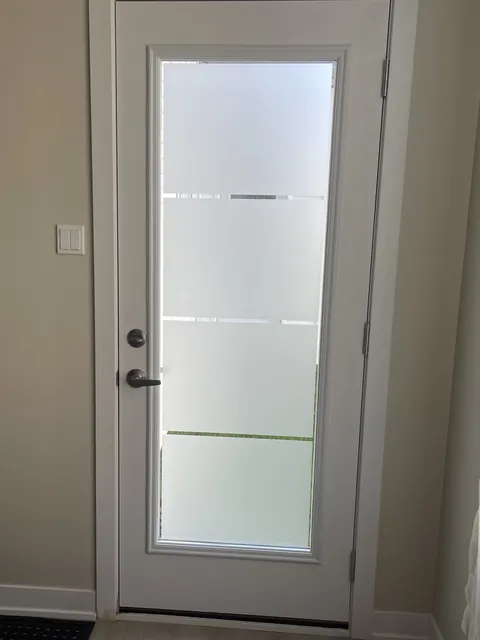
One recent job: this back door looked straight at the neighbour’s front door. We fitted the sandblasted 4 Panel in one visit. The hall is just as bright, and nobody can see in.
We fit front, side and back door glass across Ottawa and the surrounding towns, from Orléans and Rockland to Kanata, Carleton Place and Kemptville.